President Dr. Irfaan Ali has announced negotiations with commercial banks to secure cheaper agricultural loans, while calling for government spending on roads, drainage and irrigation to be matched by clear plans to increase food production.
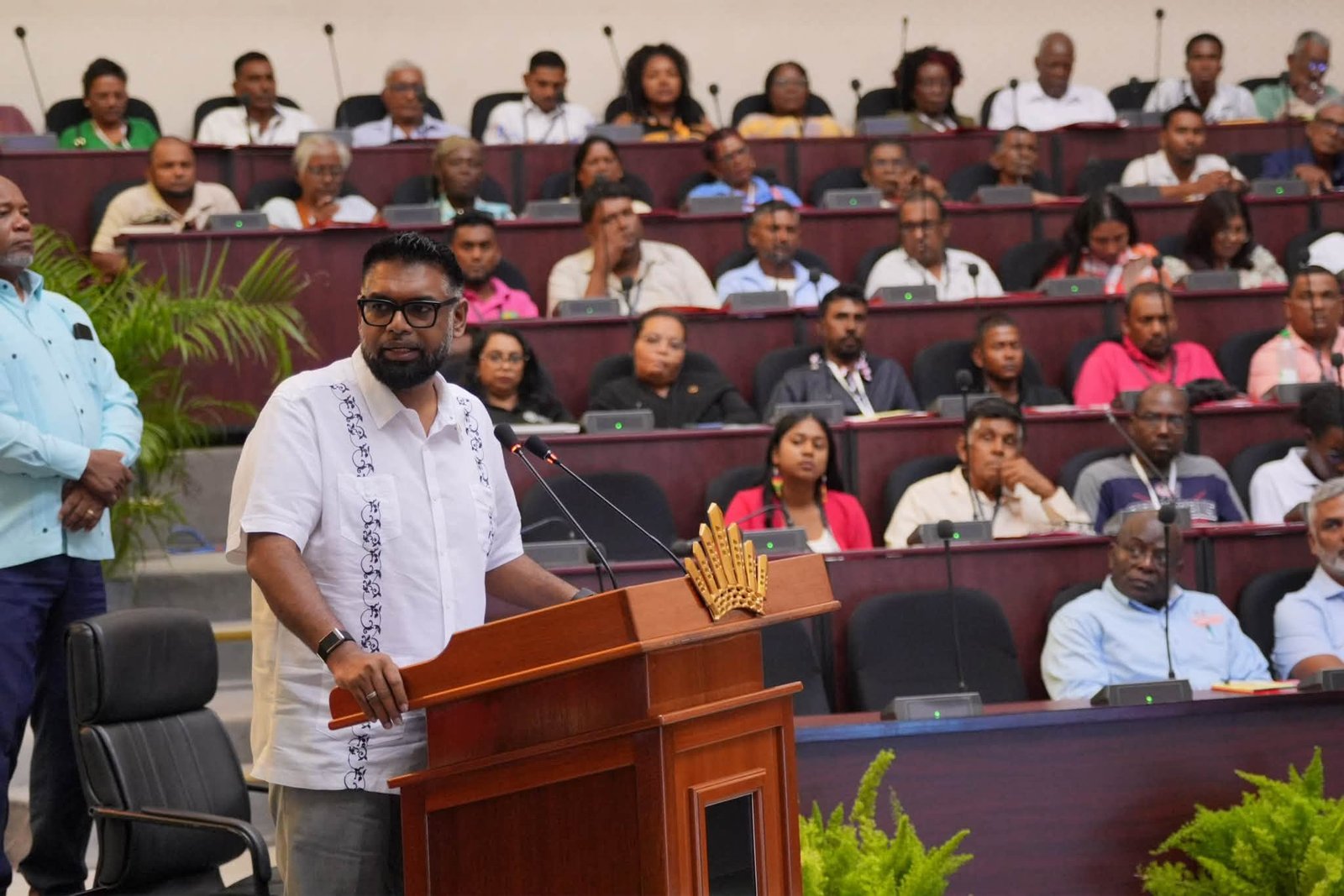
Addressing the opening of the Farmers’ Conference and Market Day 2026 on Monday, Ali said Republic Bank had committed to setting aside financing for agriculture at preferential interest rates, with discussions continuing on the terms.
The inaugural conference, held at the Arthur Chung Conference Centre, also heard from Agriculture Minister Zulfikar Mustapha, who said farmers’ recommendations would help shape a national action plan for the sector.

Ali said the Government was negotiating incentives similar to those offered to banks for low-income housing loans, with the aim of making financing more affordable for farmers entering medium- and large-scale production.
“Already we have the commitment from Republic Bank that they’re going to set aside resources for agricultural loans at a preferential rate,” the President said.
He expressed hope that the negotiated rate could be announced before the end of the week.
Ali also said Demerara Bank was offering poultry loans at five per cent and that discussions were underway to bring that rate down through additional incentives.
The commercial banking initiative comes alongside the recently launched Guyana Development Bank, which began operations on October 5. It offers eligible small and medium-sized businesses loans of up to G$3 million without interest or collateral.

According to Ali, almost 30 per cent of applications received by the development bank so far relate to agriculture. He described that interest as evidence of growing confidence in farming and agribusiness, particularly among young people.
However, the President stressed that access to financing and improved infrastructure must translate into greater output.
Using a hypothetical $300 million farm-to-market road as an example, Ali said the Agriculture Ministry should work with farmers along such developments to determine how much land would be cultivated, what would be produced and how production would increase.
“Every farm, every single farm, we should have a report or a plan, a productivity plan,” he said.
Those plans, he added, must connect production to markets, including agro-processors able to purchase crops under long-term agreements.
Ali pointed to differences between farm-gate and retail prices as an issue requiring attention. He argued that reliable purchase arrangements could give farmers greater price certainty while supplying raw materials for products such as packaged seasonings.
The President also outlined a push to expand food storage, saying stronger reserves could help cushion consumers against shortages and sudden price increases caused by disease outbreaks, climate events and other disruptions.
He described a three-month food-supply buffer as an objective, supported by expanded storage for rice, honey, poultry and fresh produce, alongside the planned regional food hub.
“We have a responsibility together, the farmers, the government, and the retailers, to work on keeping food prices affordable,” Ali said.
Meanwhile, Mustapha said the conference grew out of a concern raised by farmers that there was no national forum where they could meet, exchange ideas and discuss common challenges.
He said participants had been assigned to thematic groups based on their farming activities and expertise, with technical officers from the ministry assisting the discussions.
The intention, Mustapha explained, was to give farmers a direct role in implementing and refining agricultural policies.
“This inaugural farmers conference was created because we listen,” he said. “We created it because your voice matters.”
Mustapha urged participants to focus on recommendations that could benefit the wider sector, rather than individual requests, which he said could be addressed through existing channels.
“Today is about contributing to a national action plan,” he told the gathering.
The conference forms part of Agriculture Month 2026, observed under the theme “Innovate, Nourish, Grow: Building a Strong and Sustainable Guyana.”