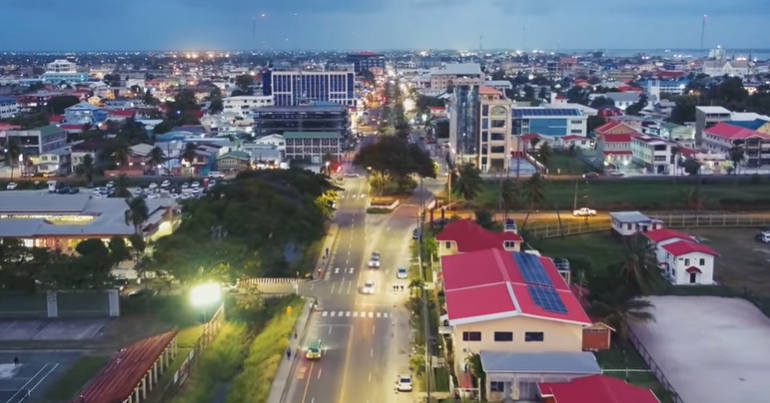
Guyana’s economy expanded by an estimated 33.3% during the first half of 2026, while the non-oil economy grew by 10.1%, as strong performances in oil and gas, construction, mining and services continued to drive economic activity.
President Dr. Irfaan Ali disclosed the figures during a press conference on Monday, saying the Government has also revised its full-year growth forecast to 20.8% for the overall economy and 10.2% for the non-oil economy.
If that projection is realised, 2026 would mark the sixth consecutive year of expansion in Guyana’s non-oil economy following the contraction recorded in 2020.
The figures show that while petroleum remains the dominant driver of Guyana’s rapid economic expansion, several traditional and non-oil sectors are also recording growth.

The oil and gas subsector expanded by an estimated 41.3% during the first six months of the year, while the wider mining and quarrying sector grew by 40.7%.
Gold mining increased by an estimated 11.3%, while bauxite grew by 7.3%. Other mining activities, including sand, stone, manganese and diamonds, expanded by approximately 40%.
Construction also continued its strong growth trajectory, expanding by 24.7% year-on-year.
Ali said the figures were particularly significant given that the sector is growing from an already elevated base following several years of accelerated infrastructure, housing and private-sector development.
The services sector grew by an estimated 7.2%, while manufacturing expanded by 3%. Sugar production expanded by 19.3% during the first half of the year, while rice grew by 4.4%. Forestry increased by 15.4% and fishing by 4.1%.
However, the broader agriculture, forestry and fishing sector recorded a marginal contraction of 0.5%, with Ali pointing to challenges including transportation, logistics, higher input costs and weather conditions.
The other crops subsector contracted by 6.4%, which the President attributed largely to weather-related challenges. Ali argued that the numbers demonstrate that economic activity is broadening beyond petroleum.
“Industries lead to jobs, jobs lead to more income, more income lead to better economic prospects,” he said while discussing the expansion taking place across the economy.
The President also pointed to increased lending as another indicator of economic activity. Private-sector credit grew by 11.5%, while credit to households increased by 14.6%. Real estate mortgages expanded by 21.2%.
Ali said the figures point to what he described as an economy demonstrating “strength,” “diversification” and “structural stability.”
The expansion comes as Guyana continues to experience large-scale investment in oil and gas, housing, roads, commercial developments, hotels and industrial projects.
The pace of growth is also placing increasing pressure on infrastructure and public services, particularly electricity. During the same press conference, Ali said the rapid addition of businesses, industries and households has contributed to a sharp increase in electricity demand.
The President has maintained that Guyana will require major investments in energy, transportation and other infrastructure to keep pace with the country’s economic transformation.