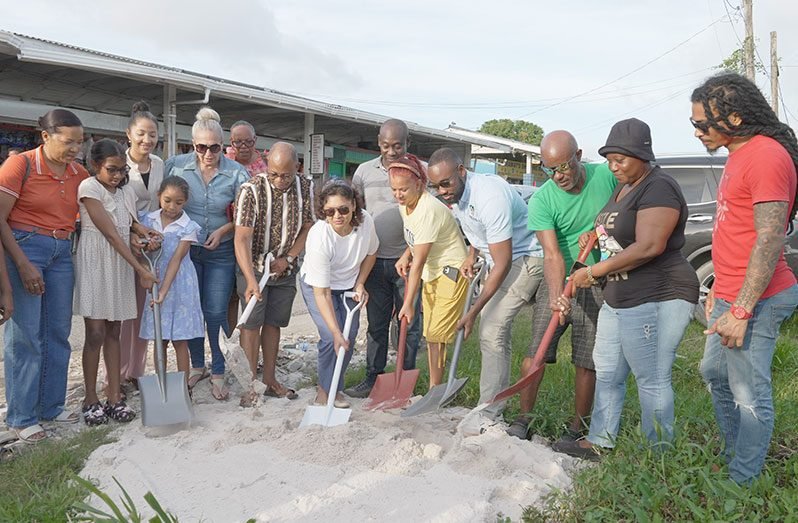
The government is aiming to launch projects for about 12 new markets across Guyana by the end of 2026, Minister of Local Government and Regional Development Priya Manickchand said.
Speaking on The Guyana Dialogue, Manickchand outlined a programme combining new market buildings, expanded facilities and the restoration of Georgetown’s historic markets. She said the investment was intended to address roadside congestion, inadequate sanitation and deteriorating facilities while supporting livelihoods.

The year-end target relates to the launch of market projects through sod-turning ceremonies, with construction extending beyond December.
Manickchand said the planned groundbreaking at New Amsterdam would bring to five the number of new markets for which she had turned the sod over the preceding year. She identified the others as Buxton, East Ruimveldt, Zeelugt and Pouderoyen.
Further groundbreakings were expected at Tuschen, La Penitence and Soesdyke, among other locations, with the minister putting the number of new markets at “about 12” by year-end.
“We’re not building for the sake of building,” she said, explaining that the projects formed part of a wider effort to improve communities and the quality of services available to residents.
Manickchand said roadside vending had developed as people sought to earn a living and meet shoppers’ needs. However, she noted that the resulting arrangements could be disorganised, create sanitation problems and inconvenience people living nearby.
The new facilities, she said, would provide functioning washrooms for both vendors and customers, along with designated sections for different types of goods.
“All of the new markets will have the amenities that you expect, proper functioning washrooms for the vendors as well as consumers, organised spaces,” Manickchand said.
She explained that market layouts were being prepared with food safety in mind, including appropriate separation of raw meat from other foods. Many of the designs also include food courts where vendors can sell familiar Guyanese offerings such as egg balls, puri and fish cakes.
Vendors are being involved in the planning process, she added.
The programme has advanced through several recent groundbreakings. At Pouderoyen, the government launched a $1.52 billion replacement market on Sept. 12. According to a Ministry of Local Government and Regional Development release, the two-storey facility will provide additional space for existing traders, roadside vendors and new businesses. Construction is expected to take 18 months.
The sod was also turned on Sept. 16 for a $1.3 billion market at Zeelugt, East Bank Essequibo. The planned facility will accommodate more than 90 vendors, compared with approximately 54 operating along roads and reserves in the community. Its design includes parking, a taxi bay, washrooms and waste-management facilities.
In New Amsterdam, the groundbreaking subsequently took place on Sept. 18 for a market project costing approximately $1.03 billion.
Beyond the new buildings, Manickchand said work was also planned or underway at markets in several regions. She cited construction at Suddie and Rosignol, further expansion at Charity, and plans to rebuild markets at Anna Regina, Mackenzie and Plaisance.
In Georgetown, the programme includes work on Bourda and Stabroek markets. Manickchand said the Stabroek project would combine restoration of the historic building, including its clock and architectural features, with an extension intended to accommodate vendors currently operating on the streets.
She said the work involved the King’s Foundation and reflected President Irfaan Ali’s intention to preserve Georgetown’s architectural character as the city develops.
For Bourda, she said a company had begun presenting conceptual designs. Planning would include arrangements for temporarily displaced vendors, with the aim of making the construction process as smooth and quick as possible.
Manickchand also stressed that the markets would need continuing maintenance after construction. She said each would have a committee bringing together vendors, shoppers, community representatives and local government officials to help oversee its operation.
Stall fees would contribute to basic upkeep, but she acknowledged that maintaining the facilities would also require spending on maintenance and changes in how people use and care for public spaces.
The minister described markets as places where farmers, poultry rearers, meat producers and other traders connect with consumers, while residents build relationships and obtain fresh produce.
“Markets are part of our economic ecosystem, but also part of our community life that we’d like to revive and make sure it’s healthy, thriving and growing,” she said.