The National Assembly has passed legislation restoring the 2009 benefits framework for former presidents, removing several financial restrictions introduced in 2015 despite strong Opposition objections over potential costs to taxpayers and the lack of defined spending limits.
The Former Presidents (Benefits and Other Facilities) Bill 2026 was approved without amendment in the early hours of Tuesday, following a marathon debate that began last Wednesday and continued when Parliament reconvened on Monday.
The legislation, piloted by Senior Minister in the Office of the President with Responsibility for Finance, Dr. Ashni Singh, repeals the 2015 Act and restores benefits covering residential utilities, household employees, clerical and technical assistance, medical treatment, personal security, government-maintained vehicles and travel allowances.
It also removes restrictions affecting former presidents who engage in private business, trade or paid employment after leaving office. These benefits are separate from the pension already available to former heads of state.
Under the 2015 legislation, several entitlements were subject to financial or numerical limits, including monthly ceilings on utility expenses and restrictions on the number of employees and vehicles provided by the State.
The removal of those restrictions became the central point of contention during the debate, with Government MPs arguing that former presidents should receive appropriate support in recognition of their service, while Opposition members questioned the financial implications.
Defending the legislation, Singh maintained that the changes would restore consistency in how former presidents are treated, regardless of their political affiliation.
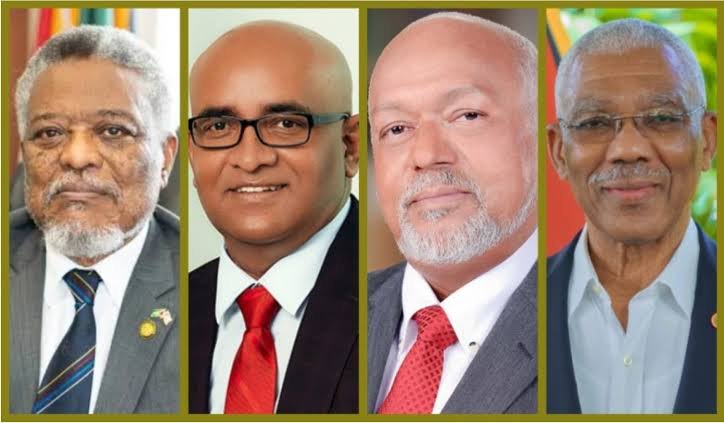
He argued that the 2015 restrictions created unequal arrangements, particularly for former President David Granger, who became subject to provisions that did not apply retrospectively to former Presidents Samuel Hinds, Bharrat Jagdeo and Donald Ramotar.
According to Singh, the 2009 framework established legal certainty for benefits that had previously been provided through administrative arrangements.
The Finance Minister rejected suggestions that removing statutory financial ceilings would give former presidents unrestricted access to public funds.
He argued that expenditure would remain subject to parliamentary appropriations, oversight by the Committee of Supply, examination by the Auditor General and scrutiny through the Public Accounts Committee.
Attorney General Anil Nandlall, SC also defended the legislation, explaining that certain benefits had been provided to former presidents long before the 2009 law was enacted.
He maintained that the framework protects former heads of state from having their entitlements arbitrarily withdrawn by successive governments.
Nandlall further disputed concerns that the legislation would allow taxpayers to subsidise private businesses operated by former presidents, pointing out that provisions covering water, electricity and telephone services relate specifically to their residences.
Minister of Parliamentary Affairs and Governance Gail Teixeira questioned the restrictions imposed in 2015, arguing that fixed limits on utilities and medical treatment could be unreasonable, particularly when former presidents require specialised healthcare.
Public Works Minister Juan Edghill similarly maintained that the State should not determine the dignity and treatment afforded to former presidents based on changes in political administration.
He also defended the right of former presidents to pursue employment or professional activities after leaving office without automatically losing their benefits.
However, Opposition Chief Whip Tabitha Sarabo-Halley argued that the debate should not be reduced to the circumstances of Granger or any other former president.
She maintained that Parliament was establishing a framework that would apply to future presidents and should therefore contain adequate financial safeguards.
Sarabo-Halley questioned how authorities would distinguish between expenses associated with a former president’s private residence and costs arising from commercial activities.
She also argued that the removal of spending limits must be considered against the financial pressures facing ordinary Guyanese families.
APNU Member of Parliament Dr. Terrence Campbell raised similar concerns, questioning whether the Government had conducted an assessment of the legislation’s long-term cost to the State.
Campbell argued that Parliament should be provided with projections showing how expenditure could increase over the coming decades as more former presidents become eligible for benefits.
He also contrasted the proposed entitlements with the difficulties faced by retired workers seeking pension payments and other benefits.
Fellow Opposition MP Ganesh Mahipaul questioned the Government’s acknowledgement during the debate that certain benefits had been provided to Granger beyond the limits imposed by the existing legislation.
Mahipaul argued that the admission raised questions about compliance with the law and the accountability of public officials responsible for expenditure.
Opposition MP Odessa Primus also criticised the proposed changes, arguing that the Government should place greater emphasis on the needs of vulnerable citizens, including pensioners, families struggling with medical expenses and people facing financial hardship.
She maintained that respect for former presidents did not require Parliament to remove reasonable financial restrictions on their benefits.
Despite those objections, Government MPs insisted that the legislation was not intended to create a privileged class but to ensure former heads of state continued to receive appropriate security, healthcare and other facilities.
Closing the debate, Singh dismissed the Opposition’s argument that the new framework would create unlimited financial obligations, insisting that existing public financial management laws would continue to regulate expenditure.
The Government maintained that restoring the 2009 arrangements was necessary to preserve the dignity of the presidency, while Opposition MPs continued to argue that clearly defined statutory ceilings would provide stronger protection for taxpayers.
The Bill was subsequently approved at its second reading before passing through the committee stage without amendment and securing its third reading.