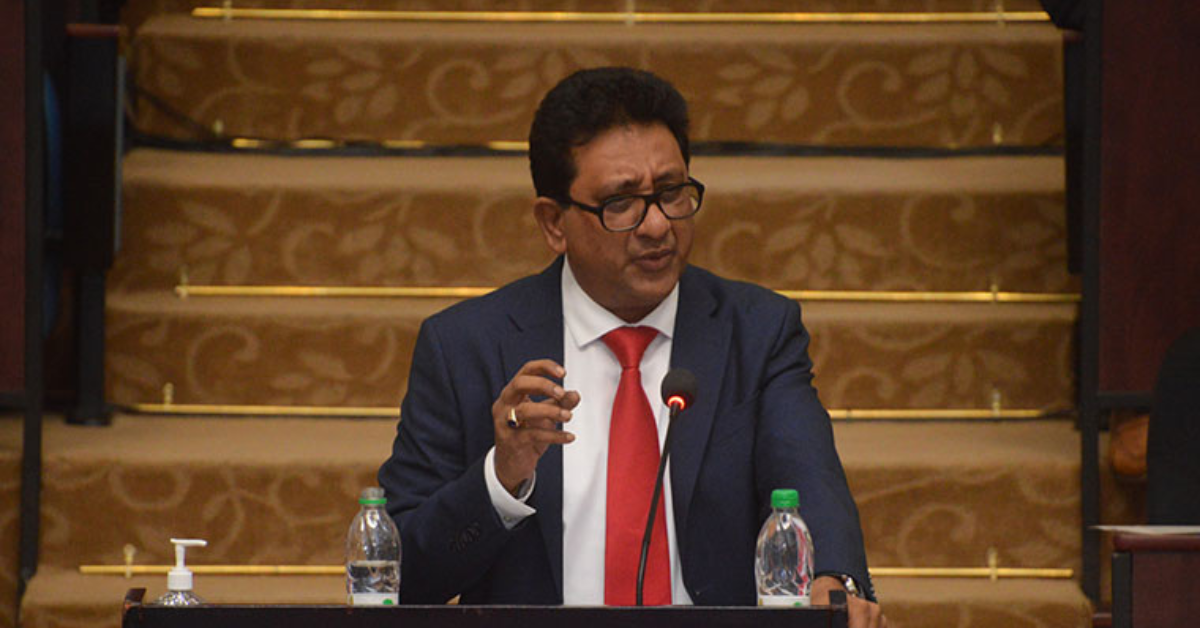
Attorney General and Minister of Legal Affairs, Anil Nandlall, SC, has slammed the A Partnership For National Unity (APNU) proposed amendments to the Natural Resources Fund (NRF) Act as both procedurally improper and largely cosmetic, arguing that it should not be entertained by the National Assembly.
The proposed amendment, tabled in the name of parliamentarian Dr. Terrence Campbell, seeks to bar the government from using Guyana’s oil revenues for recurrent expenditure and to restrict withdrawals from the Fund to infrastructure, development and disaster-related projects.

Campbell, who is a member of the NRF Investment Committee, has also filed a High Court action challenging the constitutionality of aspects of the NRF Act, including Section 16, which governs withdrawals from the Fund.
Speaking on his weekly programme, “Issues in the News,” Nandlall said while parts of the proposal had already been publicised in the media, the National Assembly was bound by long-established Standing Orders that prevent it from considering matters that are actively before the courts.
He explained that Standing Order 41(2) codifies the “sub judice” rule, which prohibits Parliament from debating issues that are the subject of ongoing litigation, a rule he said flows from the constitutional separation of powers between the legislature, executive and judiciary.
According to Nandlall, Campbell’s High Court action is a “frontal challenge” to the legality and constitutionality of the NRF Act, with a particular focus on Section 16 and, more specifically, subsection (2).
The case, filed on February 20, 2024, names the Attorney General and the Senior Minister in the Office of the President with responsibility for Finance as respondents, and is being heard in the High Court.
He said all required documents have been filed, Campbell’s lawyers have made submissions, and the matter remains pending.
Against that backdrop, Nandlall argued that Campbell is effectively seeking the same outcome in two branches of government.
He said a litigant cannot simultaneously pursue the same cause in two fora and noted that even within the court system, such duplication would typically be treated as an abuse of process, forcing the party to choose which case to proceed with.
By extension, he argued, Parliament should not be used as an alternative route to secure relief already being sought in court.
Beyond the procedural objections, Nandlall also dismissed the proposed amendments as largely superficial.
He said Section 16 of the current NRF Act already provides that withdrawals from the Fund must be deposited into the Consolidated Fund and used to “finance national development priorities,” including initiatives aimed at securing an inclusive green economy and projects responding to major natural disasters.
The APNU also proposed that revenues from the Fund must not support recurrent government expenditure and must be used “only to finance” infrastructure and development projects, including green initiatives and disaster-related projects.
Nandlall contended that the language in the existing law and in the proposed amendment essentially expresses the same policy intent, even if phrased differently.
In his view, the changes are “more a matter of style than substance” and do not alter how the Fund is to be used in any meaningful way.
He added that other suggested tweaks, such as renumbering clauses, were “inconsequential” and did not justify reopening the legislation.
Nandlall also criticised what he described as the political expectations behind the opposition’s push, arguing that it was unreasonable for a party with a minority of seats in the National Assembly to expect the government to adopt largely stylistic changes to its own flagship legislation.