The Government and Opposition clashed in the National Assembly over proposed changes to the benefits enjoyed by former presidents, with Government MPs defending the removal of financial restrictions while Opposition members warned that taxpayers could be left funding extensive lifetime privileges without adequate spending limits.
The heated debate on the Former Presidents (Benefits and Other Facilities) Bill 2026 began on Wednesday and continued into the early hours of Thursday, with Members of Parliament divided over whether the proposed legislation promotes fairness or creates unnecessary financial obligations for the State.
Piloting the Bill, Senior Minister in the Office of the President with Responsibility for Finance, Dr. Ashni Singh, argued that former presidents should be treated with dignity and respect, regardless of their political affiliation.
The proposed legislation seeks to repeal the Former Presidents (Benefits and Other Facilities) Act of 2015 and restore the framework introduced in 2009.
The 2015 legislation, enacted under the former APNU+AFC administration, introduced restrictions on several benefits, including utilities and medical expenses.
Singh described those restrictions as discriminatory, arguing that the legislation had created different arrangements for former presidents depending on when they left office.
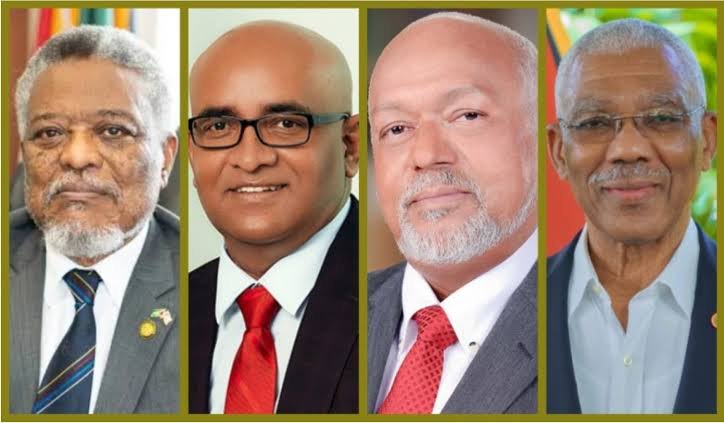
According to the Finance Minister, the 2015 changes did not apply retrospectively to former Presidents Bharrat Jagdeo, Samuel Hinds and Donald Ramotar, who continued to fall under the previous framework.
He argued that former President David Granger became the first former president subject to the 2015 framework and would therefore be the main immediate beneficiary of its repeal.
The Minister maintained that the legislation was intended to establish a consistent standard rather than grant preferential treatment to any individual.
“We choose today dignity over spite and a single standard over discriminatory treatment,” Singh told the House.
He further argued that individuals who had occupied the highest constitutional office should continue to receive appropriate support, including security and other facilities associated with their former positions.
However, Opposition MPs questioned whether that support should be provided without clearly defined financial ceilings.
APNU Member of Parliament Sharma Solomon acknowledged that former presidents deserve dignity in retirement but argued that the same principle should apply to teachers, nurses, public servants and ordinary pensioners who had dedicated years of service to the country.
Solomon said the issue was not whether former presidents should receive benefits, but whether those benefits should be provided without reasonable financial limits.
He pointed to provisions covering utilities, household staff, personal security, state-maintained vehicles, medical care, travel allowances and tax exemptions.
The APNU MP argued that the proposed framework did not establish sufficiently clear limits on the number of support staff or vehicles, or the overall cost of several benefits.
He maintained that the State must balance its responsibility to former presidents with fairness, accountability and the prudent management of public funds.
WIN Member of Parliament Dawn Hastings-Williams also criticised the proposal, arguing that the Government was asking taxpayers to finance a lifetime package of privileges while many families continued to struggle with basic living expenses.
“This bill is not a bill of dignity,” Hastings-Williams declared, arguing that former presidents already deserved appropriate pensions, security and support.
In her view, however, restoring benefits without sufficient financial restrictions would place an unfair burden on ordinary Guyanese.
She also questioned the absence of specific reporting and accountability provisions governing the expenditure.
The Government rejected suggestions that the proposed arrangements were excessive.
During her contribution, Minister Priya Manickchand defended the provision of benefits to former presidents and argued that the country had a responsibility to maintain the dignity of the presidency even after an individual left office.
In a striking disclosure, Manickchand asserted that the Government had not enforced the existing caps on certain utility and healthcare benefits provided to former President Granger.
She characterised that approach as an effort to ensure that the former head of state continued to receive appropriate treatment.
Government speakers continued to maintain that security, healthcare and other necessary facilities should reflect the needs of former presidents rather than be restricted by rigid spending ceilings.
Opposition MPs, however, insisted that recognition of public service must be accompanied by transparency and accountability, particularly where substantial public expenditure is involved.
Despite the lengthy exchanges, the Bill was not passed during Wednesday’s sitting.
The National Assembly adjourned in the early hours of Thursday, with debate scheduled to continue on Monday, November 23, 2026.