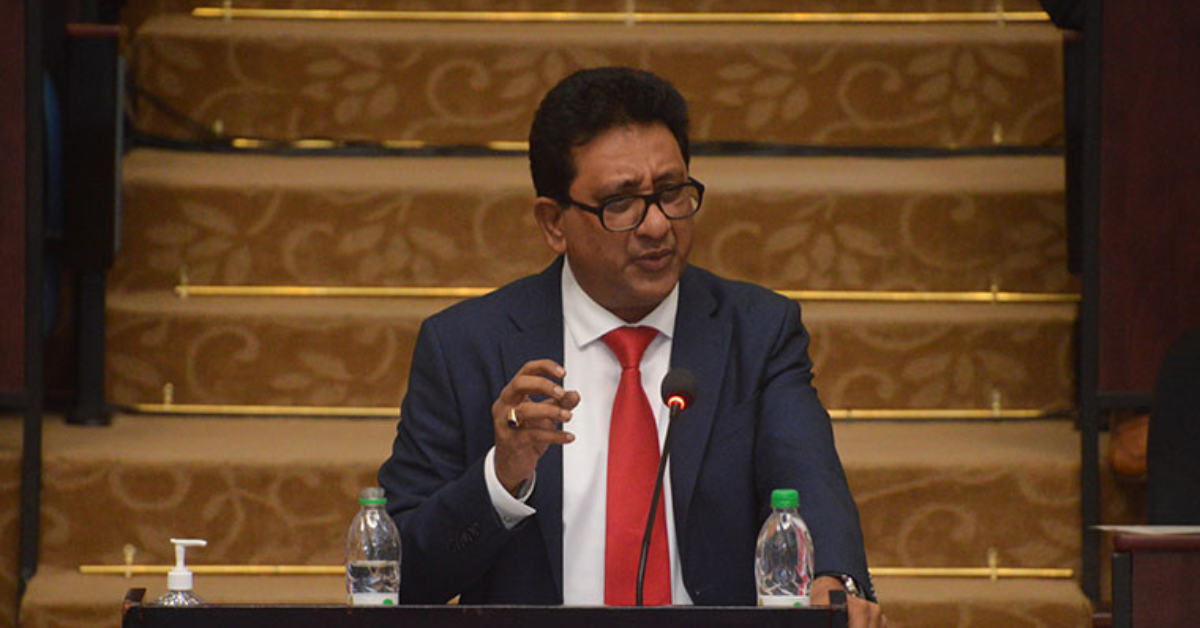
Special Prosecutor Glen Hanoman has signalled that the prosecution may challenge Chief Magistrate Judy Latchman’s decision to maintain Opposition Leader Azruddin Mohamed’s bail in the ongoing extradition proceedings, arguing that the ruling could set a dangerous precedent for the administration of justice in Guyana.

Speaking to reporters outside the Georgetown Magistrates’ Courts on Tuesday, Hanoman said the prosecution would examine the Magistrate’s reasons for refusing its latest application before determining whether to pursue an appeal or other legal challenge.
The Chief Magistrate, for a second consecutive day, rejected an application to revoke Mohamed’s bail, finding that the prosecution had failed to establish substantial grounds to justify such a decision.
Hanoman, however, expressed surprise at the ruling, maintaining that the allegations and criminal charges brought against Mohamed since he was granted bail provided sufficient grounds for its revocation.
“I am not disappointed, but I am surprised,” Hanoman told reporters.
Reflecting on his experience at the criminal bar, the attorney said he had never encountered a case in which the grounds for revoking bail were so compelling.
“In my long history of active practice for the last 32 years, I have never come across a case in which there are such strong grounds for the revocation of bail,” he said.
Hanoman indicated that the prosecution would consider its options once the Magistrate’s reasons were made available.
“Once those reasons are provided to us, I think there is a strong possibility that we may review or appeal the Magistrate’s refusal to revoke,” he stated.
The attorney argued that the decision could send the wrong message about the consequences of allegedly committing additional offences while on bail.
He maintained that allegations of witness interference and serious criminal conduct should be given significant consideration when determining whether an accused person should remain on bail.
According to Hanoman, the prosecution’s position is that Mohamed’s conduct since being granted bail raises serious concerns about his continued release in the extradition proceedings.
Among the issues raised by Hanoman was the Opposition Leader’s residential address, which the prosecutor alleged was not the location where Mohamed ordinarily resides.
He claimed that information obtained through surveillance conducted by the Police Special Branch indicated that Mohamed did not live at the Republic Park address provided to the court.
Hanoman acknowledged that Mohamed’s father and other relatives reside at the property but maintained that the Opposition Leader frequents several other locations.
The prosecutor argued that providing an inaccurate residential address could, by itself, constitute sufficient grounds for refusing or revoking bail.
He also claimed that the prosecution had offered to present evidence supporting its position but that the court had not accepted the material in the manner proposed.
However, in rejecting the application, Chief Magistrate Latchman found that there was no solid evidence establishing that Mohamed had provided a false address or posed a flight risk.
In delivering her ruling, Latchman maintained that the existence of additional criminal charges against Mohamed did not automatically establish that he had committed an offence or was likely to commit another.
She emphasised that the court required substantial evidence to support the prosecution’s claims and that alleged breaches of bail conditions must be established.
The Magistrate also indicated that the prosecution could submit supporting evidence through affidavits.
The prosecution had relied on several pending criminal matters, including allegations of witness interference, obstruction of justice and offences involving police surveillance footage.
Hanoman also raised the possibility of Mohamed facing a murder charge in connection with the 2021 killing of gold dealer Ricardo Fagundes, popularly known as “Paper Shorts”.
Mohamed’s attorneys opposed the application, arguing that the pending allegations did not provide sufficient legal grounds to revoke his bail in the extradition matter.
The Magistrate ultimately agreed that the prosecution had not met the required threshold.
Although Mohamed has retained bail in the extradition proceedings, the ruling does not mean he will be released from custody.
The Opposition Leader remains on remand at the Lusignan Prison in connection with a separate cybercrime matter involving the alleged unauthorised acquisition and disclosure of surveillance footage from the Guyana Police Force Command Centre.
Mohamed and two police officers have been charged in connection with that matter.
Meanwhile, Mohamed and his father, businessman Nazar Mohamed, continue to face extradition proceedings following a request from the United States.
The two are wanted in connection with an 11-count federal indictment involving allegations of fraud, money laundering and a gold-smuggling operation.