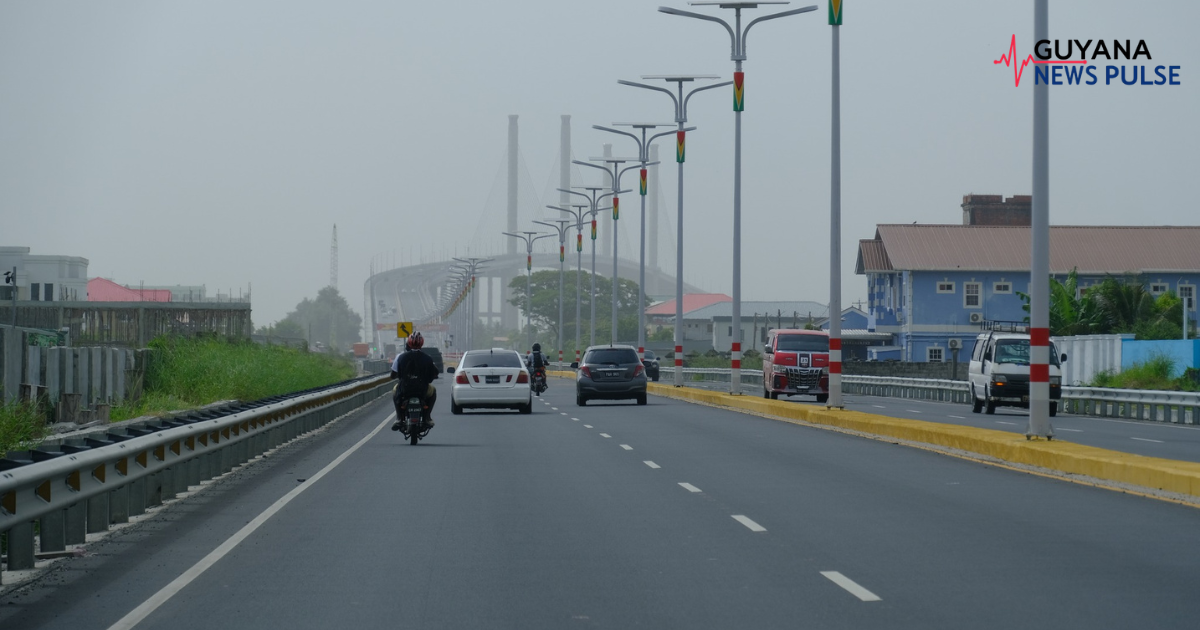
The Environmental Protection Agency (EPA) has warned that the current influx of Saharan dust affecting Guyana’s Low Coastal Plain is expected to persist until late Sunday, March 1, 2026.
In a public advisory issued on February 26, the EPA said air quality across Georgetown and surrounding areas continues to be impacted by the dust plume, with conditions currently classified as “Unhealthy for Sensitive Groups” in some locations.
According to the agency, air quality readings in Georgetown and the Whim area in Berbice have fallen within the unhealthy range for vulnerable populations. Sensors located in Eccles and Central Georgetown recorded PM2.5 levels exceeding the World Health Organization (WHO) guidelines for good air quality.
The decline in air quality is attributed to elevated concentrations of fine particulate matter (PM2.5), resulting from the Saharan Air Layer, a mass of dry, dusty air originating from North Africa. The dust is transported across the Atlantic Ocean by upper-level air currents and has contributed to the visible haze blanketing parts of the country.
The EPA explained that the fine particles of sand, dirt, and dust, combined with high humidity levels, have worsened conditions along the coast. These atmospheric conditions are projected to remain in place through the weekend.
Residents, particularly those in sensitive groups such as children, the elderly, and individuals with respiratory or cardiovascular conditions, are being urged to limit outdoor activities. The agency also recommends wearing masks when outdoors for extended periods and seeking medical attention if symptoms such as difficulty breathing, persistent coughing, or chest discomfort develop.
The EPA said it will continue to monitor air quality conditions and provide updates as necessary. Citizens can access near-real-time Air Quality Index data through the agency’s website by selecting “Your Environment” and then “Air Quality Data.”