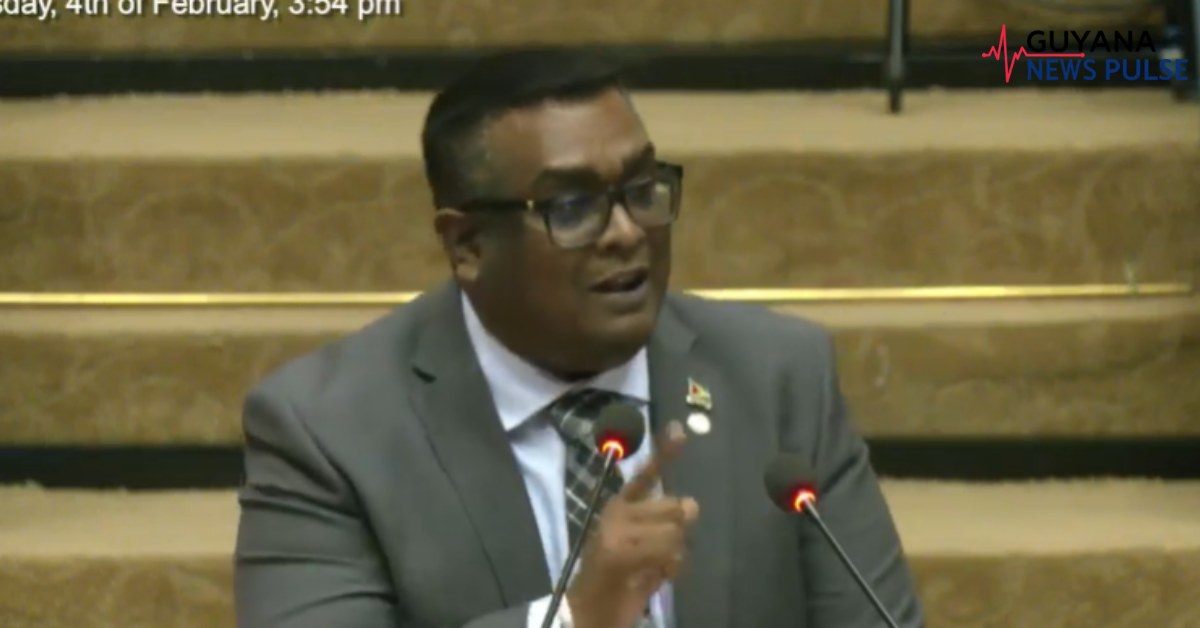
Attorney General and Minister of Legal Affairs Anil Nandlall, S.C., says the government is moving to overhaul Guyana’s public procurement system and standard contract framework to provide stronger protection for public funds and hold contractors more accountable.
Speaking on his Issues in the News programme, Nandlall said the review will cover public procurement processes, the Public Procurement Act, and the standard form contracts currently used by the State.
According to him, many of the contracts now in use are outdated and need to be brought into line with modern international models developed by the International Federation of Consulting Engineers, known as FIDIC.

He said a major focus of the reform will be to tighten contractual terms so that contractors are more directly answerable for how they perform their obligations.
The government also plans to review the remedies available when breaches occur, with the aim of strengthening the State’s position when contracts are not properly executed.
Nandlall also signalled concern over the role played by engineers and supervisors on public projects, arguing that they are paid substantial sums to monitor performance, detect breaches and protect the interests of the State or the government agency awarding the contract.
However, he said there is a recurring problem in which supervisors and engineers appear to align themselves more with contractors than with the public agencies they are supposed to serve.
As an example, the Attorney General said that instead of resisting contract variations that drive up project costs, engineers and supervisors often support requests for extensions and changes that result in increased contract values.
He suggested that part of the problem may be that their own remuneration tends to rise when contracts are extended or varied upward. He said that aspect of the system will also come under scrutiny as part of the wider review.
Nandlall further noted that the planned reforms are being driven in part by a recent ruling of the Caribbean Court of Justice in the case of Cara Investments Limited v. Christopher Ram and the Bank of Nova Scotia, which he said has major implications for procurement in Guyana.
According to him, the decision may require adjustments not only to the State’s model contracts and bidding documents, but possibly to the Public Procurement Act itself, so that the legal framework reflects the practical realities created by the judgment.
The Attorney General said the objective of the reforms is to improve oversight, reduce costly failures, and ensure the treasury is better protected when public contracts are awarded and executed.