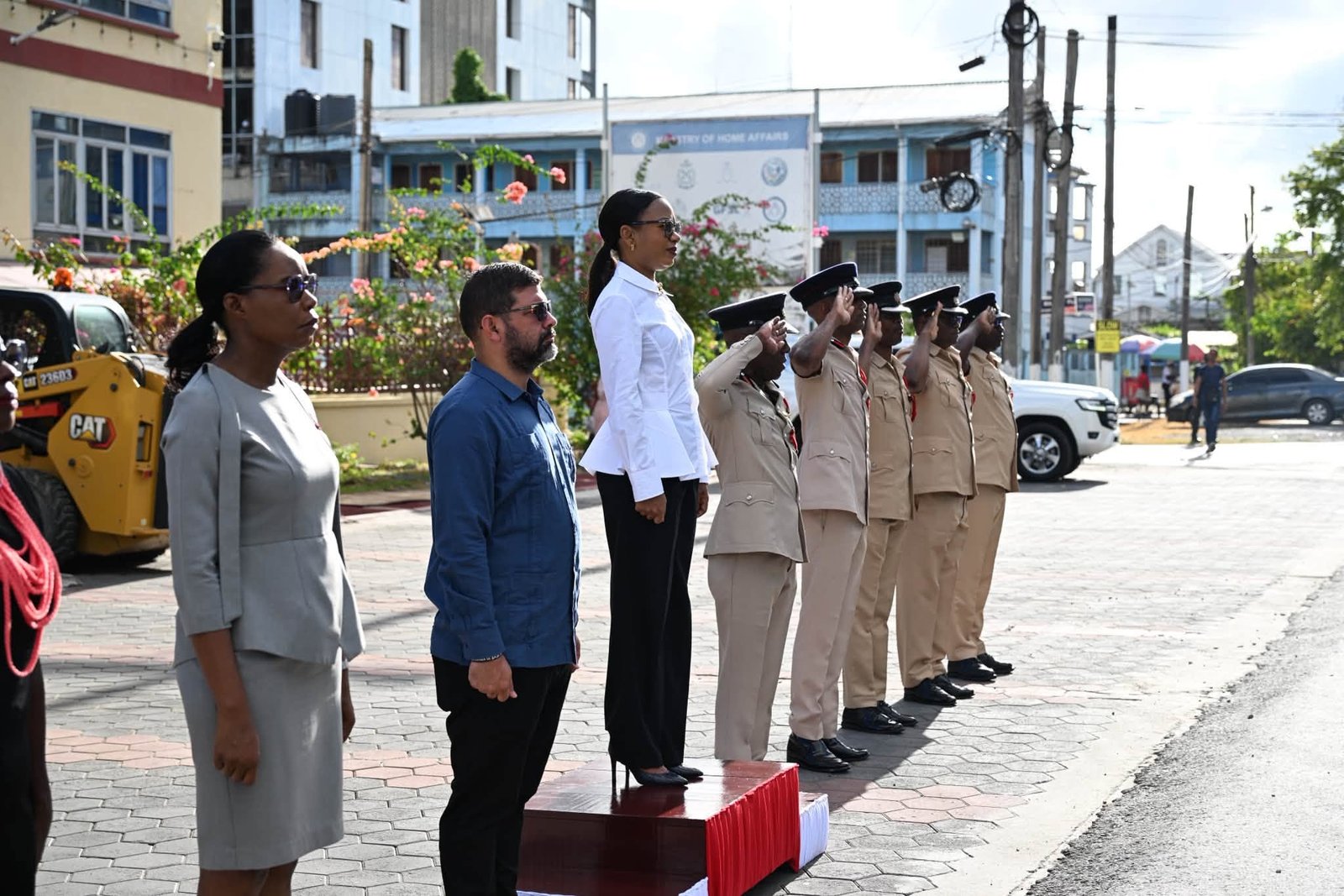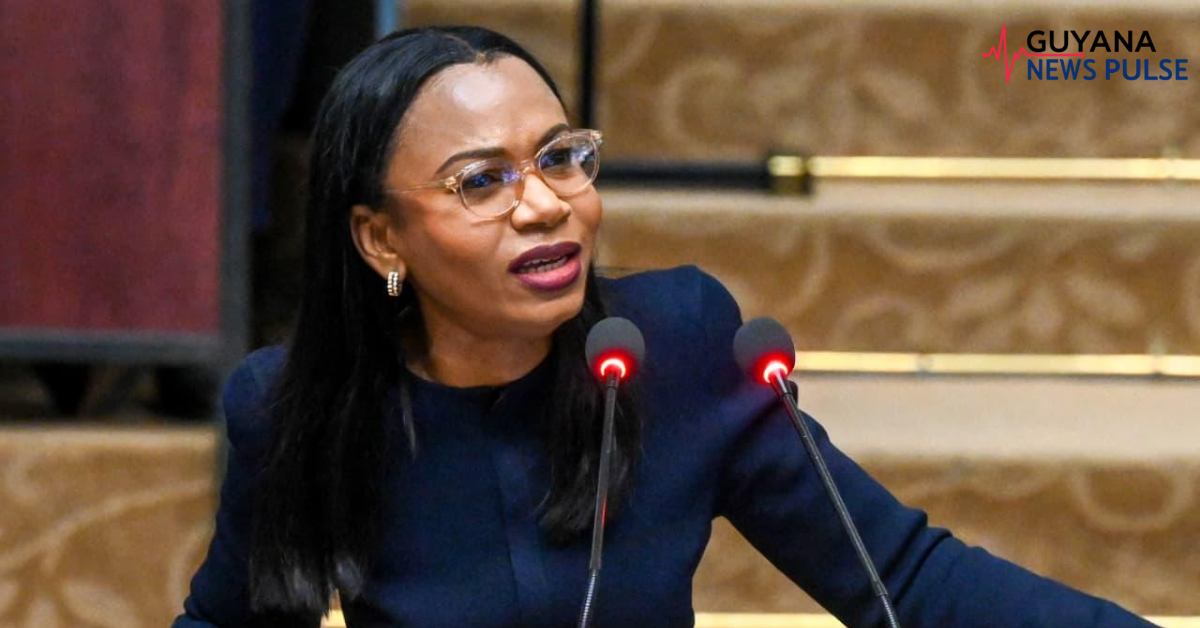
Minister of Home Affairs Oneidge Walrond on Friday threw her support behind Budget 2026, telling the National Assembly that Guyana is seeing “return on the investment” from historic spending on the security sector, citing a 25.5% reduction in serious crime and improvements in domestic violence outcomes.
Walrond was the second speaker on the final day of the budget debate. In a direct response to the preceding contribution from WIN MP Toshana Famey-Corlette, Walrond said the domestic violence figures presented were incorrect.
“The figures for domestic violence were inaccurate…we are in fact experiencing in 2025 a decrease in the reports of domestic violence and an increase in the proportion of convictions,” she told the House, adding that the report was available.
Walrond said the Guyana Police Force (GPF), Prison Service and Fire Service have benefited from “historic levels of investment” between 2020 and 2025, with more to come in 2026. She insisted that the spending is delivering measurable outcomes.
“Crime is down historically… serious crime down by 25.5% from the end of 2025,” she said. She also pointed to rehabilitation outcomes, stating that Guyana’s recidivism rate is “the lowest it is in the region” at 14%, compared with 40% and 50% across the wider Caribbean.
The minister criticised the opposition for what she described as misinformation and an unwillingness to engage in debate, telling the House that the National Assembly is “not running the campaign…on social media.”
Walrond also used her platform to commend Finance Minister Dr. Ashni Singh and the Ministry of Finance team for the work behind Budget 2026, arguing that “competence matters” in national planning.
She dismissed opposition criticism of Home Affairs capital projects and challenged claims that large sums were “wasted,” offering examples of what $11 billion could fund, such as “about 4,000 core homes,” more than “110,000 cash grants,” or paying “1,000 workers minimum wage for nine years.”
During her remarks, exchanges erupted across the floor, including a point of order after she suggested a member had “designated himself” as a shadow minister; the Speaker said he would review the record.
Walrond then anchored her case for Budget 2026 in a historical comparison, quoting from the March 12, 1993, budget speech to describe Guyana’s economic and democratic conditions after the PPP/C returned to office following 28 years out of government.
She recalled references to an era of rationing, deteriorating public services and heavy debt burdens, arguing that the country has since moved from a period when debt servicing consumed all revenues to a position where debt service is far lower, freeing up resources for modern schools, hospitals and social programmes.
She accused the opposition of continuing “cheap, divisive tactics,” and argued that genuine empowerment comes from “access…inclusion,” jobs, education, entrepreneurship and home ownership.
Walrond closed by returning to public safety, saying the decline in crime is being driven by “intelligence-led policing,” expanded surveillance, increased police presence, community partnerships and investment in training.
She also issued a warning on financial crimes and money laundering, telling the House that weak enforcement can threaten correspondent banking relationships, international transactions and investor confidence. In outlining the scope of money laundering offences, she cautioned that even commingling illicit proceeds with legitimate funds can expose assets and future income to legal risk.
“We will take financial crimes seriously…[and] continue to enforce our anti-money laundering laws,” she said, arguing that protecting the financial system is essential to Guyana’s “trajectory of important nation building.”
Walrond ended by commending Budget 2026 to the House and invoking lines from Guyanese poet Martin Carter as she urged support for the government’s programme.